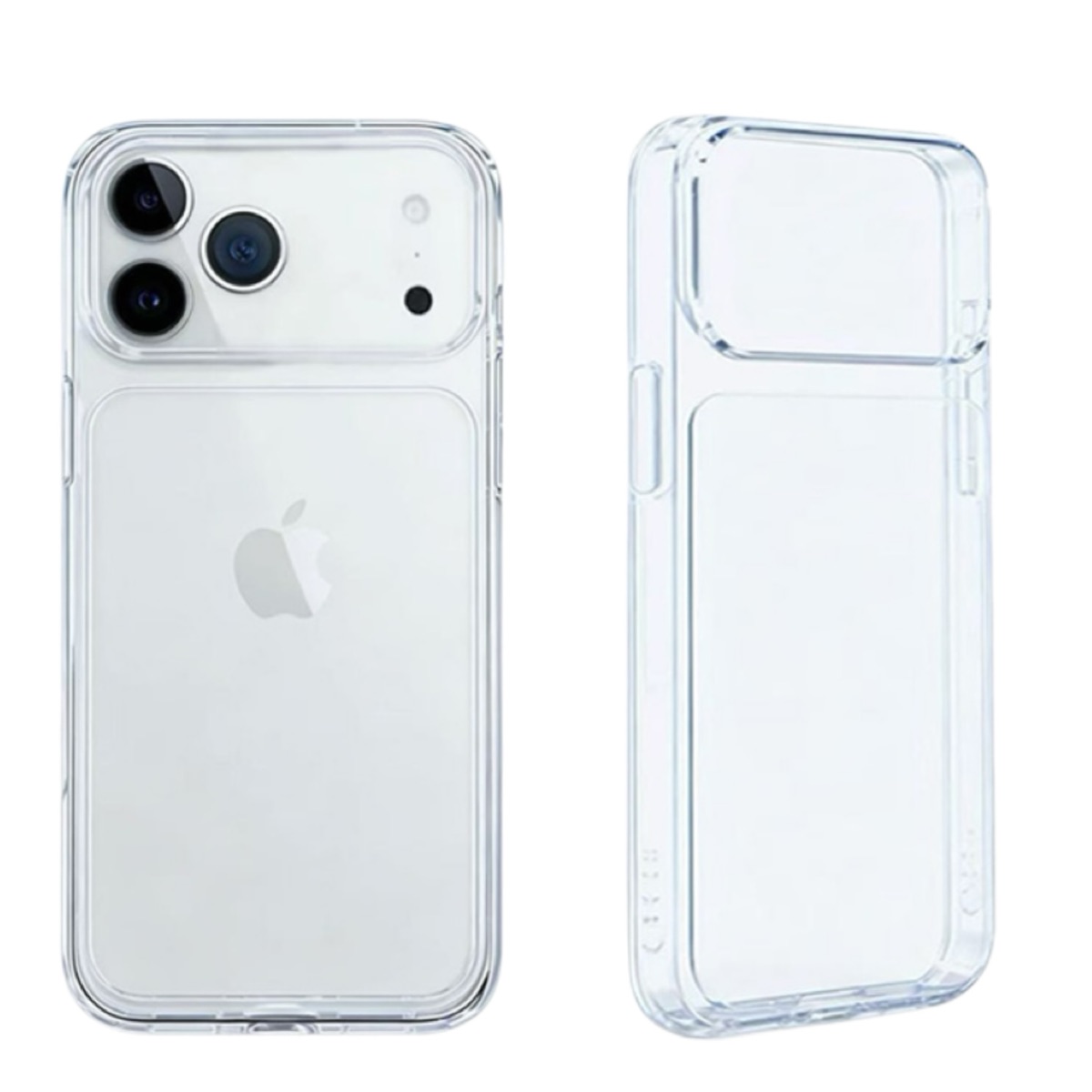
The material of a phone case decides almost everything downstream: how it feels, how long it stays clean, what printing methods work, what it costs, and how quickly it fails. Choosing it late — after the design is fixed — is the most common reason a case line underperforms.
Here is how the five materials we mould most often actually behave, and where each one belongs in a product range.
PC is rigid. A 1 mm PC back panel resists bending, holds a crisp edge and takes a matte or frosted texture well. It is the standard choice for the back plate of a two-part case, and it is the only common shell material that can be made genuinely transparent without turning cloudy in a few months — as long as it carries an anti-yellowing treatment.
Strengths: shape retention, sharp moulded detail, excellent for UV printing and laser engraving, good transparency when treated.
Weaknesses: it cracks rather than absorbs. A pure PC case dropped on a corner can split. It is also slick in the hand unless textured.
Best used for: the hard back plate in PC + TPU hybrids, clear cases, printed designs, slim cases where rigidity matters more than shock absorption.
Thermoplastic polyurethane is flexible, slightly rubbery and rebounds after impact. It is what actually protects the phone in most cases, because it deforms and spreads the energy of a drop instead of transmitting it.
Strengths: impact absorption, easy fitment, good grip, low tooling cost, works well in thin sections.
Weaknesses: clear TPU yellows. This is a chemistry problem, not a quality-control problem — UV exposure oxidises the material. Untreated clear TPU can visibly yellow within 3–6 months of daily sunlight. TPU also attracts dust at the edges and can stretch over years of removal.
Best used for: the bumper and side rails of hybrid cases, soft slim cases, rugged cases where the TPU layer is thick and hidden by a PC frame.
Liquid silicone rubber gives the soft, slightly velvety surface that premium phone cases are known for. It is applied over a PC or TPU substrate, so the case keeps its shape while the outside feels like suede.
Strengths: the best hand-feel of any common material, excellent grip, quiet and warm, hides fingerprints well.
Weaknesses: it picks up lint and pocket dust readily, and it can scuff at the corners where the coating is thin. Silicone is also the hardest surface to print on cleanly — logos are usually laser-etched or applied as a separate insert.
Best used for: mid-to-premium plain-colour ranges, brand-building flagship products, cases where feel is the selling point.
Real leather-faced laminate over a rigid substrate is what most "leather" phone cases actually are. A thin leather face is bonded to a PC or fibre backing, which keeps the shape on a chassis that would otherwise stretch the leather.
Strengths: genuine premium appearance, develops a patina, takes hot-stamp debossing and embossing extremely well.
Weaknesses: cost, and the fact that leather cannot cover a hinge on a foldable — that section must use a flex material. Edges need careful lamination or they lift after months of handling.
Best used for: flagship foldable cases, gift and corporate ranges, any product where the unboxing impression matters.
Tempered glass is not a case material, but it has become one in two specific roles: as a front cover on foldable cases, and as a privacy layer.
A 0.33 mm tempered layer over a foldable's front screen adds scratch resistance without killing touch sensitivity, and when combined with a privacy film it blocks side viewing beyond roughly 28 degrees. The trade-off is light transmission — a privacy layer drops head-on brightness to around 68%, which is visible indoors but manageable.
| Material | Rigidity | Drop protection | Yellowing | Print quality | Relative cost |
|---|---|---|---|---|---|
| PC | High | Low–medium | Low (if treated) | Excellent | Low |
| TPU | Low | High | High when clear | Good | Low |
| Liquid silicone | Low–medium | Medium–high | None | Poor (etch instead) | Medium |
| Leather laminate | High | Medium | None | Excellent (debossing) | High |
| Tempered glass | High | Very low | None | N/A | Medium |
Almost every case that sells well at scale is a hybrid, because it combines the strengths and lets each material do one job:
One practical warning: do not spec a clear TPU case and promise customers it will stay clear. Either use treated PC for the transparent panel, or accept that the bumper will amber and design around it.
TPU absorbs more energy, so it protects better in a single drop. PC keeps its shape better over time. That is exactly why hybrids exist — TPU where it deforms, PC where it must hold.
No material stays perfectly clear forever, but treated PC backs show no visible yellowing for 12–18 months in normal use, versus 3–6 months for untreated clear TPU.
PC. It accepts UV printing and silk screen directly, holds fine detail, and does not need a primer coat.