"N52 magnets" appears in almost every magnetic phone case listing, usually as a badge of quality. It is a real specification — but it is not the number that decides whether a wallet stays put on a bumpy road. This article explains what the grade means, where the holding force actually comes from, and how to test a magnetic case before you commit to a production run.
N grades describe the maximum energy product of a neodymium magnet — roughly, how much magnetic energy the material can store per unit volume. N35 is the baseline grade; N52 is near the practical ceiling for sintered neodymium.
The practical consequence is size. To achieve the same holding force, an N52 magnet can be thinner and smaller than an N35 magnet. That matters in a phone case, where every 0.2 mm of thickness either fits or does not.
| Grade | Relative strength | Typical use in a case |
|---|---|---|
| N35 | Baseline | Thick cases with room for larger magnets; low-cost magnetic rings |
| N42–N45 | +20–30% | Most mid-range magnetic cases; good balance of thickness and hold |
| N52 | +45–50% | Slim magnetic cases, foldables, anywhere thickness is constrained |
A higher grade is not automatically better. It is more brittle, more expensive, and in a thick rugged case an N42 array with better geometry can outperform a badly placed N52 array.
Holding force depends on the total magnetic circuit, not on one part. Three factors dominate:
This is the design problem buyers underestimate. Three common collisions:
A card slot sits exactly where the magnet ring wants to be. The usual solution is to move the ring lower, which changes the accessory position and can make the case top-heavy on a car mount. Some designs accept a weaker hold to keep the slot centred.
On a foldable, the hinge occupies the natural centre line. The magnet array must be routed into the lower back panel, clear of the flex. This is why magnetic foldable cases have a distinctive offset ring position — it is not a styling choice.
A steel ring or kickstand placed over the magnet area will shunt the field. Either the ring must be positioned outside the magnetic zone, or it must use a non-magnetic alloy.
If the case has a full metal back plate, a large rotating ring over the centre, or a very thick leather surface, a magnetic design is fighting physics. In those cases a mechanical attachment — a clip plate, a ring mount or a proper kickstand — delivers a better experience than a compromised magnet array.
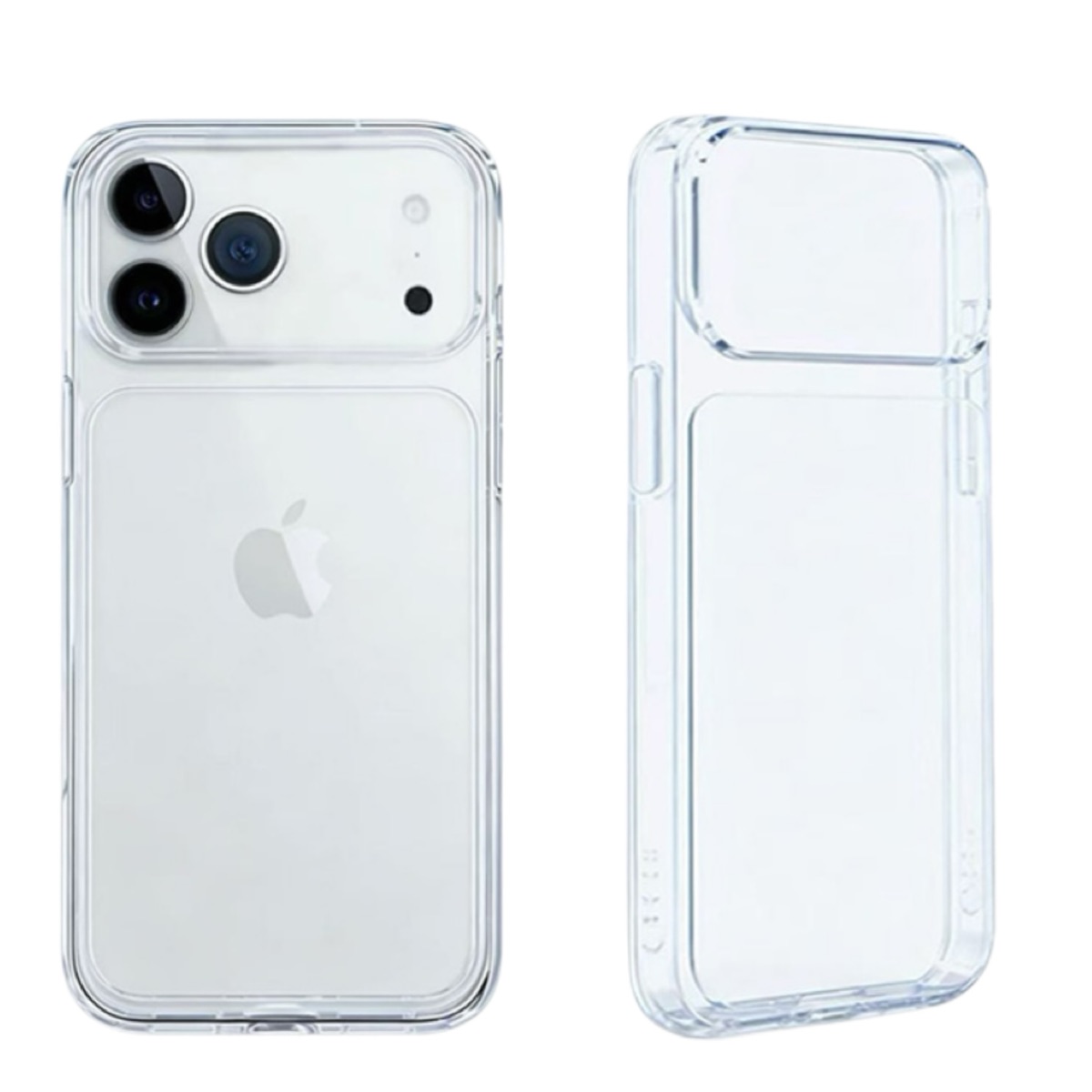
For reference, our full-cover magnetic foldable case routes the array clear of the hinge, while the clear magnetic case keeps a visible ring for maximum alignment accuracy in a thin shell.
Only when thickness is the constraint. N52 gives more force in less space. In a thick case with room for a larger array, N42 can match the hold at lower cost and with less brittleness.
Only if the array is misaligned or the back is too thick. Correct alignment supports full-rate charging; a misaligned ring typically still charges but at reduced speed.
Modern phones are designed around MagSafe-style magnetic accessories and are not damaged by case magnets. The genuine risks are magnet retention (a loose magnet rattling inside the shell) and interference with magnetic stripe cards.